Human Required / Guide
Before you hire an AI robot, ask who’s behind the controls
A robot-cleaning report raises a practical question: what should customers know about human operators, cameras and the service they are buying today?
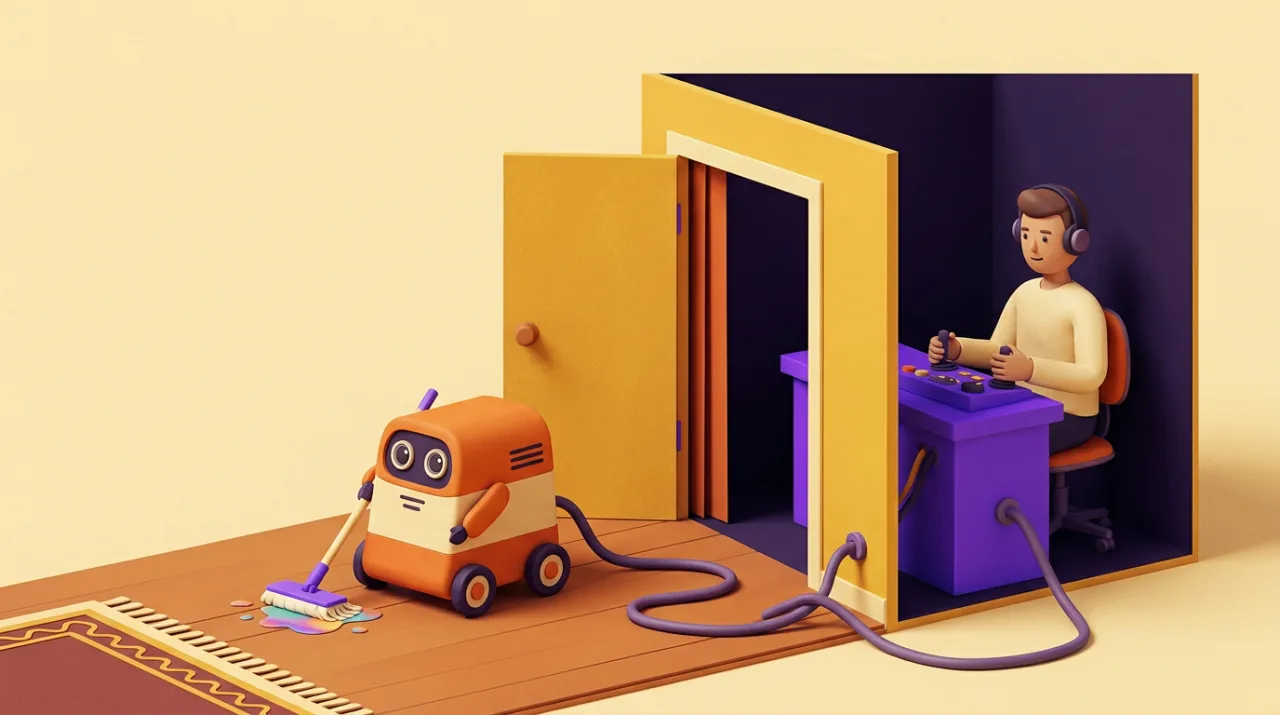
AI-generated editorial illustration · EachLabs
Analysis · Human Required
Before asking what an AI robot can do, ask who is doing it.
That sounds like a small distinction. It changes what you should expect when a machine enters your home, what happens when it gets stuck, and what information you need before inviting it back.
A robot, with people behind it
In a November 6 report, MIT Technology Review describes a home-cleaning service from San Francisco startup Tau Robotics. Human operators guide the robots remotely through cameras, while the company gathers training data toward greater autonomy. A cofounder says some tasks, including vacuuming and mopping, already work without human help. The report does not independently establish that claim.
This publication has not tested the service. The account is useful evidence of one reporter's experience, not a verdict on every visit or every household.
Four questions worth asking
A consumer does not need to understand a robotics model to ask for a clear explanation of the service.
Who controls it? Ask which tasks the robot performs independently, which require a remote operator, and when someone may take over. “AI-powered” is not an answer to those questions.
What can the operator see? Ask what the cameras capture, whether recordings are retained, who can access them, and whether declining training-data use changes the service. These are questions to put to a provider, not claims about Tau's current policies.
What happens when it stops? Ask who handles an interrupted job, whether someone needs to be present, and how an incomplete visit is resolved. Decide whether that arrangement fits the way you actually use your home.
What are you paying for today? Separate the service available now from the capabilities a company hopes to deliver later. Judge the current offer on its stated scope and terms, rather than treating a future product as part of the purchase.
Keep the wonder. Ask the boring questions.
A robot does not need to be fully autonomous to be useful. Human assistance also does not make a service worthless. The important thing is that the customer understands the arrangement before agreeing to it.
Our view: the interesting test is not whether a machine looks futuristic. It is whether the service can explain its capabilities, its human involvement and its limits clearly enough for someone to make a sensible decision.
Read the original MIT Technology Review report.
Source
Original report · Published 2026-11-06 10:00:00 UTC. Reviewed before publication.
This article was drafted with AI and published under the site’s editorial settings.